Keep Port Stable
Protect our Future.
Protect our Quality of Life.
Vote NO on April 7.
For most families in Port Washington, your home is likely your largest financial investment. Do not let an untested experiment put that investment at risk.

The Risk of Instability
We’re not talking about one project.
We’re talking about the long-term health of our housing market and the stability that homeowners depend on.
The referendum on the April 7 ballot would require citywide elections for certain economic development decisions. This would inject new uncertainty and instability into how our community grows and invests, even after those proposals have already gone through the public review process required under Wisconsin law.
Pursuant to Wisconsin Statute § 66.1105, the City of Port Washington may, through its Plan Commission and Common Council, exercise the powers necessary to create Tax Incremental Districts. Pursuant to Wis. Stat. § 9.20, through the power of direct legislation, the electors of the City of Port Washington have put forward a proposed ordinance.
Shall the City of Port Washington adopt the proposed ordinance, which, if adopted, would bar the City from creating or approving a Tax Incremental District that requires a large capital expenditure, or with a base value projected to or exceeding $10,000,000.00, or project costs exceeding $10,000,000.00, unless the creation or approval of such a Tax Incremental District has been approved by the majority of electors in a general or special election?
While this may sound like more input, it could create several unintended consequences for our community:

Costly Elections
Every project meeting a certain threshold would be subject to a citywide election. Those elections cost money paid for by the taxpayers.

Taxpayer-Funded Lawsuits
Because this proposed ordinance does not conform with State law regarding the creation of Tax Increment Districts, it will be subject to ongoing lawsuits, paid for by the taxpayers.

New Uncertainty
This ordinance creates uncertainty and delays that drive investment elsewhere. That puts Port Washington’s competitiveness — and the tax base that supports services and quality of life — at risk.
A Strong and Growing Community
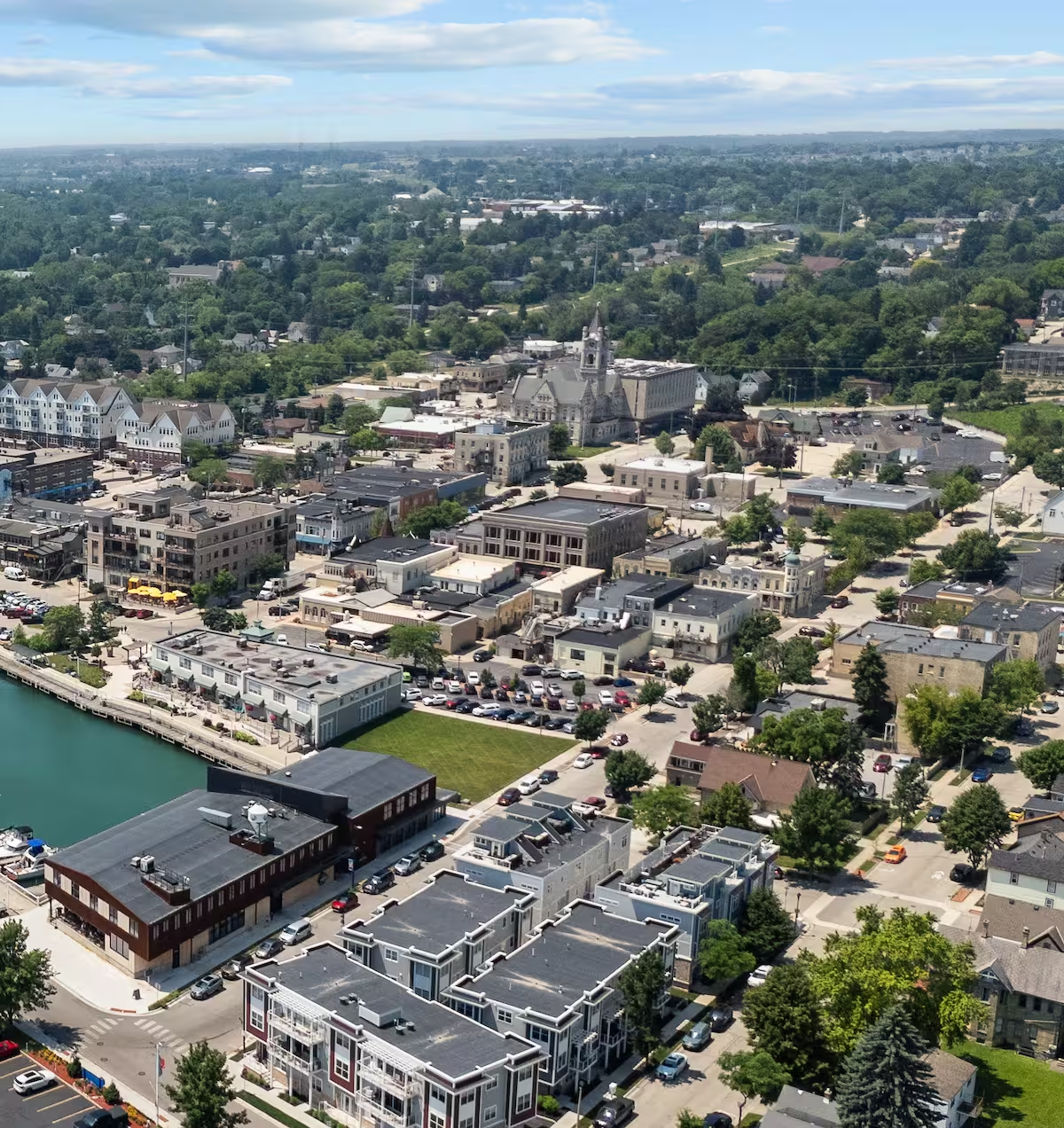
Today, the City represents approximately $1.6 billion in property value¹
Over time, hundreds of millions of dollars in value have been added through steady growth²
That growth helps strengthen the local tax base, support city services, and reduce pressure on homeowners³
That’s why stability and predictable processes matter.
(¹ Wisconsin Department of Revenue – Equalized Property Values (City of Port Washington, ~2023)
² Wisconsin Department of Revenue & regional growth trends (10-year estimated increase based on equalized value growth)
³ Ozaukee County tax distribution data / local reporting (residential share of tax burden)

The Real Question
Is it wise to experiment with Port Washington's future by creating costly elections, lawsuits, and uncertainty around economic development?
If this idea is such a good one, why isn't any other community in Wisconsin doing it?
There is a reason no other city, town, or village has adopted a referendum like this. It puts homeowners at risk.
A NO Vote Keeps Port Washington Stable
Turning development proposals into citywide political campaigns will not solve local concerns. Instead, it will create more conflict and more instability for homeowners and neighborhoods.

Seniors
Seniors living on fixed incomes are sensitive to property tax increases.
If development slows and the tax base grows more slowly, existing homeowners carry more of the tax burden.
Delays in redevelopment can also reduce the supply of downsizing options like condos or senior housing.

First-Time Home Buyers
Many housing projects that use Tax Increment Financing (TIF) include starter homes, townhomes, or apartments.
If projects face elections, delays, or uncertainty, fewer projects get built.
Less supply typically means higher housing prices and rents, making it harder for young buyers to enter the market.

Renters and Workforce Housing
When development slows, rents rise faster because supply stays tight.
That affects teachers, healthcare workers, and service workers trying to live in the community.

Small Businesses
Retail, restaurants, and service businesses depend on new residents and investment.
If projects stall or move to other communities, business growth slows.

Local Taxpayers
TIF is often used for infrastructure tied to development.
If projects don’t move forward, the cost of roads, utilities, and improvements may shift to taxpayers instead of being supported by new tax base.
Why Vote NO

Protect Taxpayers
Projects using Tax Incremental Financing already go through financial review and public hearings. This referendum adds elections and lawsuits. When government costs rise, those costs fall on homeowners.

Protect Property Values
Stable communities protect property values. When uncertainty discourages investment and economic growth, your property values can suffer.

Keep Port Competitive
Cities across Wisconsin compete for investment. This referendum would make Port Washington a far less predictable place to invest than Cedarburg or Saukville.

The Reality of the "Campaign Trail"
Supporters say this gives voters more control. In reality, it means developers proposing projects that bring businesses, housing, or services to Port Washington could first have to run a political campaign to win voter approval.
That means campaign signs, political mailers, phone calls, text messages, and door-to-door campaigning every time a project is proposed. Some investors will decide the political battles simply are not worth the risk. They will take their projects, the businesses, the jobs, and the tax base to neighboring communities.
When investment leaves, the consequences do not fall on developers. They fall on homeowners.
Read Erin Hickey, Association Executive of the Lakeshore Realtors Association's op-ed regarding the dangers of the referendum on the April 7 ballot.
Frequently Asked Questions
Answers to common questions about what the proposal would do and how it could impact the community.
What led to the April 7 ballot question?
After community debate about a proposed large-scale data center and the use of TIF, a citizen group used Wisconsin’s direct legislation process to place this measure on the ballot.
What would happen if the measure passes on April 7?
It would require a citywide vote before the City can approve certain large development agreements or TIF districts (generally over $10 million), adding a step after the current approval process.
Is this referendum about data centers?
No. The April 7 referendum is not specific to data centers. It would apply to a range of projects—including housing, mixed-use, commercial, and industrial developments—that meet the stated threshold.
What is TIF?
Tax Incremental Financing (TIF) is a tool cities use to support development by using the increase in property taxes from a new project to pay for public improvements like roads, utilities, or site cleanup. Over time, it helps grow the local tax base and support public services.
What is the current approval process for these projects?
Under Wisconsin law, projects that use TIF go through a public process that includes Plan Commission review, public hearings, and approval by the Common Council—all in open meetings.
Isn’t this just about giving taxpayers a voice?
Residents have opportunities to weigh in through public hearings, Plan Commission review, and Common Council decisions. This proposal would add a citywide election on top of that existing process.
Why could requiring a citywide vote for TIF be a problem?
It can slow down projects and make the approval process less predictable, which may discourage investment and delay housing or redevelopment.
If a development is good, why not let it pass a vote?
The current process relies on financial analysis, public input, and elected officials making decisions. Adding elections can introduce timing challenges and make outcomes less predictable.
Isn’t this about slowing down overdevelopment?
The City already reviews projects case by case through a public process. This measure would not change those standards—it would add an additional election step for certain projects.
Could this measure lead to legal challenges?
Questions have been raised about how this proposal would align with existing state laws. If adopted, any legal challenges would be addressed by the City using taxpayer resources.
What’s the broader impact of this proposal?
Adding elections to the approval process could affect timing, predictability, and how easily projects move forward over time.
Why are REALTORS® involved in this?
REALTORS® are part of the community. They work with homeowners, buyers, and local businesses every day and see how development decisions affect housing, property values, and the local economy.
Contact Us
Vote NO on April 7
Paid for by the Lakeshore REALTORS® Association.